The Trouble with Listening:
A Summer in the Company of Sound
by Zack Manning
On New Year's Eve, 2025, my wife, a group of friends, and I played a game about New Year's resolutions. The premise was simple enough. Each of us would come up with something we wanted to do differently in the coming year. Somewhere in the course of the evening, I resolved to perform more music and attend more live concerts. It was not a particularly revolutionary ambition. I am, after all, a musician. I have spent much of my life studying, performing, and thinking about music. But somewhere along the way, like so many other people, I had allowed the extraordinary convenience of recorded sound to replace the considerably less convenient business of going out and listening to something. And what a strange bargain we have made.
We live in the most technologically interconnected civilization in human history. Nearly every recording imaginable can be summoned from a device in our pockets. A Beethoven symphony, a Nusrat Fateh Ali Khan qawwali, a forgotten blues recording from Mississippi, and the latest pop sensation can all be accessed in the time it takes to order a pizza. We have never had so much music available to us, and yet we seem increasingly incapable of sharing the experience of listening to it. The great irony of our technological abundance is that we have mistaken access for connection. A concert demands something different. You must leave your house. You must enter a room with other human beings. You must surrender, however briefly, your ability to control what happens next. You cannot skip the second movement because you find it tedious. You cannot ask the guitarist to play the solo again. You cannot improve the acoustics, correct the intonation, or make the person next to you stop breathing quite so loudly.
You must listen. And perhaps more importantly, you must listen together. My summer of 2026 became a rather spectacular experiment in this proposition. There were schoolchildren singing Cole Porter, country-rock musicians at breweries, Bruce Springsteen in Washington, Bach in Santa Fe, Stravinsky in an Albuquerque museum, George Crumb performed beneath fluorescent orange lights, and a Navajo blues guitarist who could probably make a parking meter sound like Jimi Hendrix. Some of it was brilliant. Some of it was imperfect. Nearly all of it reminded me why live music matters.
The Children Have Something to Say
The summer began, appropriately enough, before summer had officially arrived. On May 7, I performed for the third consecutive year with the Sunset Mesa School Chorus in Albuquerque, under the direction of Louise Loomis. The program included works like Cole Porter's Friendship, arranged by Jay Albrecht, and Axolotl by Mark Burrows. The performers were elementary school students, which might lead the unsuspecting reader to imagine the usual assortment of endearing mistakes, nervous smiles, and parents enthusiastically applauding performances that only a parent could love. Forget it.
These children sang with an enthusiasm that would embarrass a good number of professional ensembles. There was nothing tentative about their music-making. The songs burst out of them with the sort of reckless joy that adults spend years learning to suppress in the name of sophistication. Loomis has taught music in Albuquerque for more than three decades, and her work is a reminder that musical education is not simply a matter of teaching children to sing the correct notes. It is about teaching them to participate in something larger than themselves. A chorus requires each singer to listen to the others, to breathe together, to recognize that individual expression becomes more powerful when it contributes to a collective sound. I have performed with this ensemble for three years, and for three years the songs have followed me home, lodged somewhere in my subconscious like an unusually pleasant infection.
There is something wonderfully subversive about children singing Cole Porter in an age when so much of their entertainment is delivered by algorithms. They are not merely receiving culture. They are making it. And judging by the energy in that room, they have no intention of asking permission.
Dispatches from the Brewery
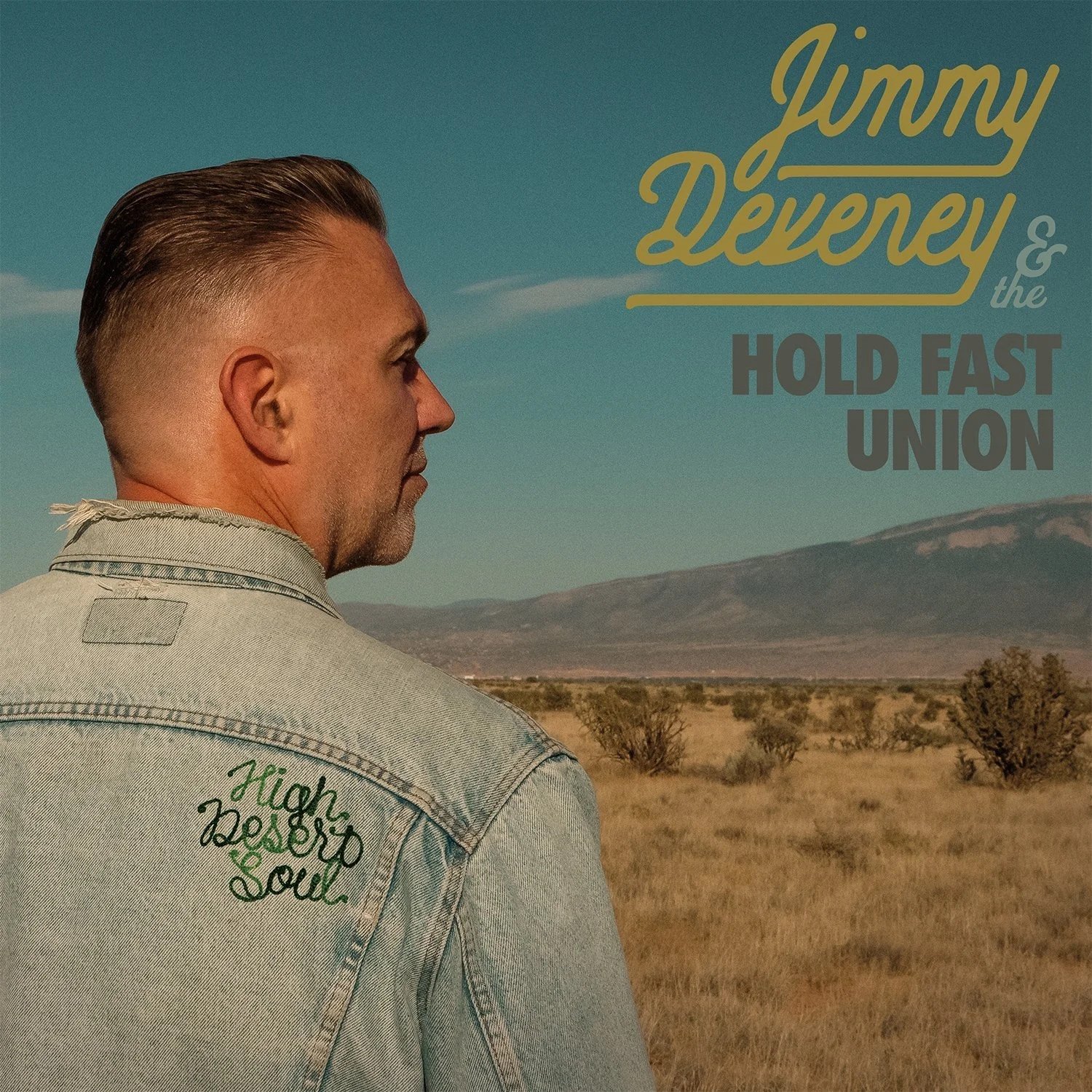
On June 13, 2026, Jimmy Deveney and the Hold Fast Union celebrated the release of their new album, Dispatches, at Marble Brewing in downtown Albuquerque. Deveney is an Albuquerque native who spent nearly a decade in Austin before returning to the musical environment that helped shape him. His music carries traces of both places. There is the dusty, open-road sensibility of New Mexico, but also the muscular country-rock vocabulary of Austin, where country music has spent decades happily drinking with blues, rock and roll, and whatever else wanders through the door. The music has the character of something lived rather than manufactured. Guitars propel the songs forward, the rhythms give them a sturdy foundation, and the overall effect belongs to a tradition in which storytelling and a good groove are equally important.
Deveney is also the sort of musician upon whom a local scene depends. He performs regularly, records prolifically, supports other musicians, and keeps putting new music into the world. His steady output of albums suggests a belief that music is something one does rather than something one waits to perfect. The brewery is an interesting American concert hall. There is no ceremonial hush, no velvet curtain, no expectation that everyone will treat the music as a sacred object. Conversations continue. Glasses collide. Someone inevitably needs another beer. And yet the music cuts through the commotion. There is something democratic about this arrangement. The audience need not arrive knowing anything about the performer, the genre, or the history of American roots music. It can simply wander into the sound and decide to stay. That is a different kind of listening from the concert hall, but it is listening nonetheless.