

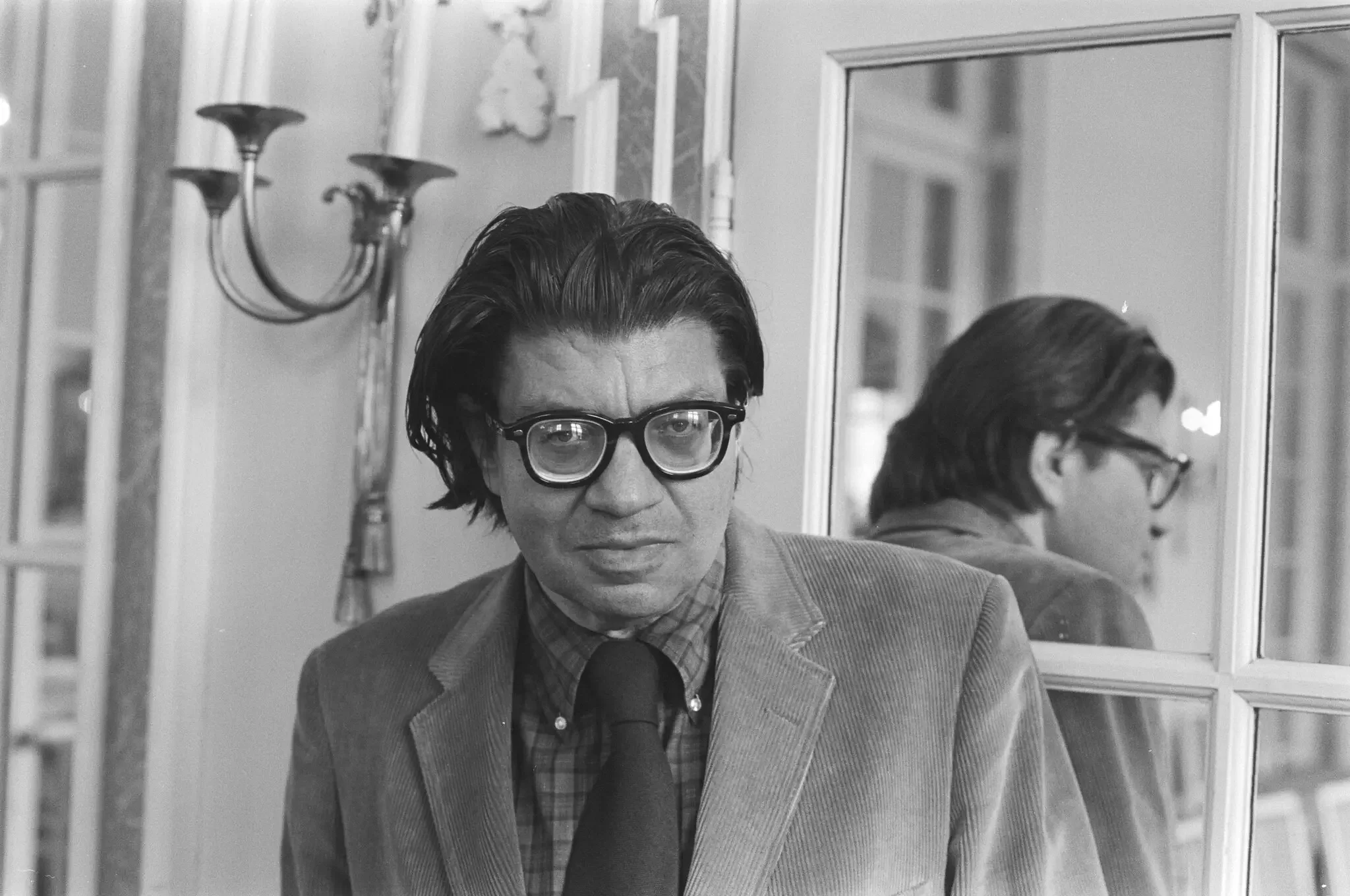
Morton Feldman's Empire of Quiet at One Hundred
By Zack Manning
August 7, 2026
Morton Feldman (1926–1987) was one of the most distinctive voices of the twentieth-century avant-garde, and this year marks the centenary of his birth. Feldman's music is often described as quiet, subtle, and sparse, but these descriptions only begin to capture its effect. His works are as concerned with silence as sound, with memory as much as melody, and with the act of listening itself as much as the notes being performed.
Here is the first paradox worth sitting with: the man was nothing like his music. Feldman was loud, gregarious, and bombastic — a big man who liked to hear himself talk, who could hold a table at the Cedar Tavern in Greenwich Village from six in the evening until three in the morning, arguing about painting. Those who knew him describe someone almost incapable of being quiet in conversation. And yet he wrote music that asks you to sit still for an hour, sometimes five, and listen to a single chord slowly lose its meaning. Few composers in history have had a personality so completely at odds with their art.
Born and raised in New York City to Jewish immigrants from Ukraine, Feldman followed an unconventional path into the world of composition. His father worked in the garment district before opening a factory near LaGuardia Airport that manufactured children's coats, and Feldman worked there well into adulthood. As a child he imitated Jewish folk melodies at the piano and began composing his own pieces at nine; at twelve he started lessons with the Russian pianist Vera Maurina Press, who had once known Scriabin. Money was tight, but his parents bought him a piano anyway — he liked to recall, decades later, that they let him choose it himself, without a word of guidance on which one or what color. He did not become a full-time composer until he was around forty years old.
Yet while his daily life remained tied to a practical family business, Feldman's artistic life unfolded at the center of one of the most vibrant intellectual communities in American history. In his early twenties, after a Carnegie Hall performance of Webern's Symphony left most of the audience cold, Feldman stepped outside and ran into John Cage. The two men struck up a conversation, and it became his entry into the downtown scene — though the meeting was less accidental than Feldman liked to make it sound in later interviews, since he and Cage already shared many friends. Through Cage he met the painter Philip Guston and the composer Christian Wolff, and he moved easily among painters, writers, philosophers, and musicians: John Cage, pianist David Tudor, Jackson Pollock, the political philosopher Hannah Arendt. Cage's support went beyond friendship in the ordinary sense — he helped both Feldman and Wolff secure publishing contracts with Edition Peters, giving the younger composers' scores a real institutional home. Their influence runs through everything he wrote.
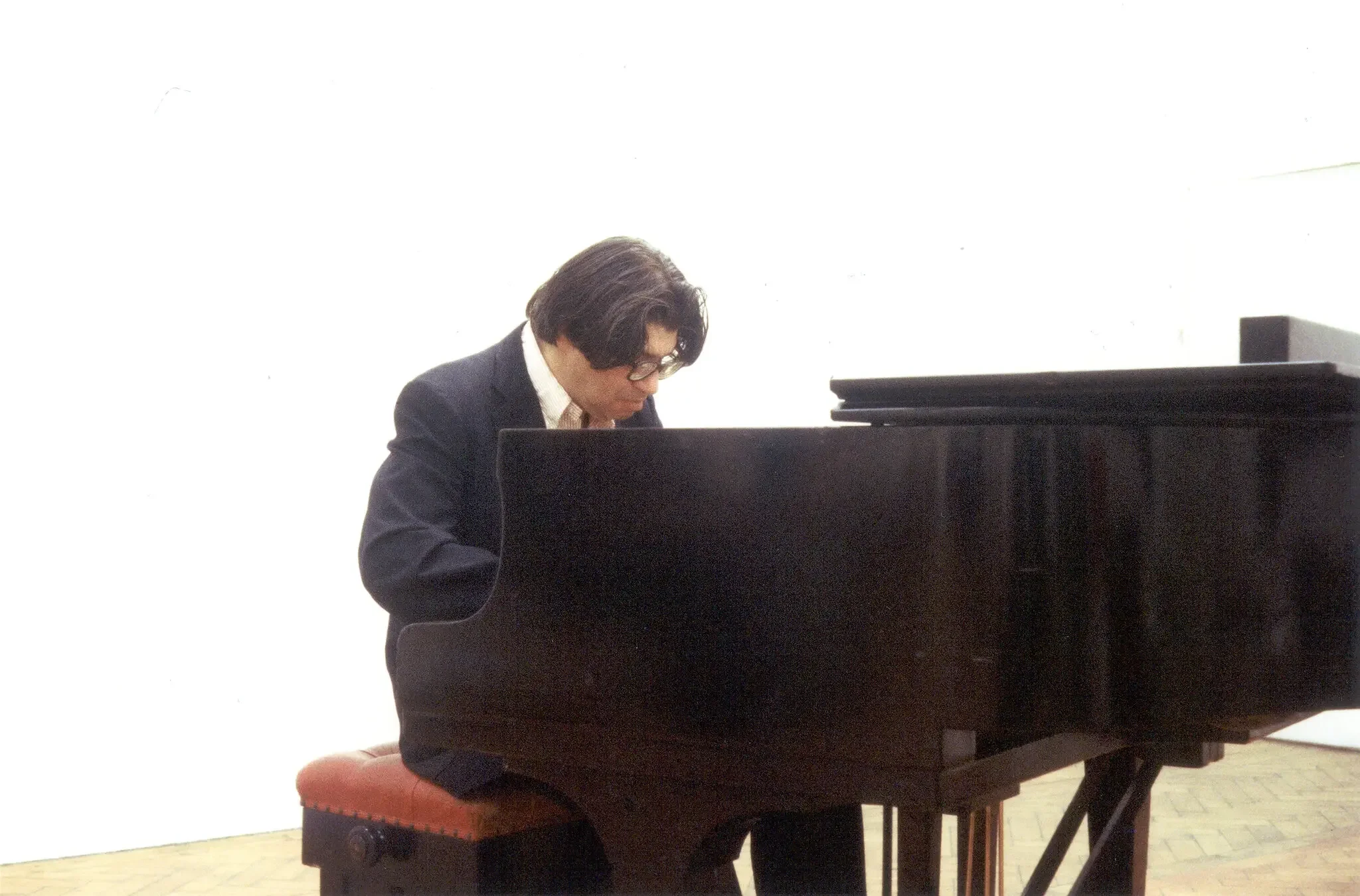
Friendship itself became one of the defining themes of Feldman's artistic life. Unlike composers whose work is organized around grand narratives or formal systems, Feldman's music often emerged from personal relationships and artistic conversations. The people around him — friends, collaborators, fellow artists — were a constant source of inspiration, and not every friendship survived the intensity of his opinions. In 1970 he went to see a Philip Guston exhibition of newly figurative paintings; when Guston asked what he thought, Feldman hesitated. The two never spoke again. Feldman later put the rupture down to a difference in artistic conviction, not personal animus, saying simply that "we broke up because of style." He remained committed to abstraction even as it cost him one of his closest friendships — a cost underscored by the fact that, at Guston's own request, Feldman and the novelist Philip Roth were the ones who recited the Kaddish at his funeral.
For Aaron Copland, written to commemorate Copland's seventieth birthday, stands among Feldman's most immediately accessible compositions. Tonal, lyrical, and luminous, it shows his ability to communicate warmth without abandoning his restrained musical language — a profound expression of admiration folded into a deceptively simple surface.
The King of Denmark comes from a different chapter entirely. Composed in 1964 during his closest years with Cage, it reflects Feldman's pioneering experiments with graphic notation and performer freedom. Cage himself credited Feldman as one of the first composers to explore music "indeterminate with respect to its performance." Rather than prescribing every detail, Feldman built frameworks within which performers made choices — music that feels controlled and unpredictable at once.
That same appetite for chance and open form ran through the wider downtown scene, most visibly in the work Cage made with the choreographer Merce Cunningham, his lifelong artistic partner. Cunningham built dances the way Feldman built scores: through chance procedures and independently generated elements, so that movement and sound were allowed to coexist without one illustrating or responding to the other.
Feldman was, throughout, devoted to abstract music. He had little patience for programmatic composition, for music that told a story or illustrated an idea outside itself. He wanted sound freed from narrative obligation, the way Guston's abstract canvases — before their turn toward figuration — were freed from representation. This is part of why he so often reached for painting, rather than other music, when he talked about his own process.
In his later years he became fascinated by the geometric patterns of Middle Eastern carpets, especially after a 1977 trip to Iran for the Shiraz Arts Festival, where he bought a rug from the local bazaar as a wedding gift for a nephew. Back home in Buffalo he became an obsessive collector, known to sprawl on the floor with a cigarette to examine his latest purchase, ash dropping onto the weave. What captivated him was how carpet makers balanced repetition and variation — intricate designs that unfold without an obvious beginning or end, patterns that look identical at first glance but reveal small human adjustments on closer inspection. This became the engine of his late music: a note changed, a rhythm skewed, a voice added or dropped, so that even his longest works feel supple rather than static.
There is a second, less romantic reason his late music sounds the way it does. Feldman's eyesight was extremely limited, and writing at the piano meant hunching close over the keys. Colleagues have suggested that the low volume and lack of accent in his music reflect his own need for distance between his ears and the instrument. His vision also meant he could compose only one page at a time — he would turn a page and it would effectively disappear from view, so what carried forward into the next page was not the notation but whatever fragments he could hold in memory. It is a striking origin story for a composer whose late works are obsessively about the unreliability of memory: the method of composition and the subject of the music were, quite literally, the same problem.
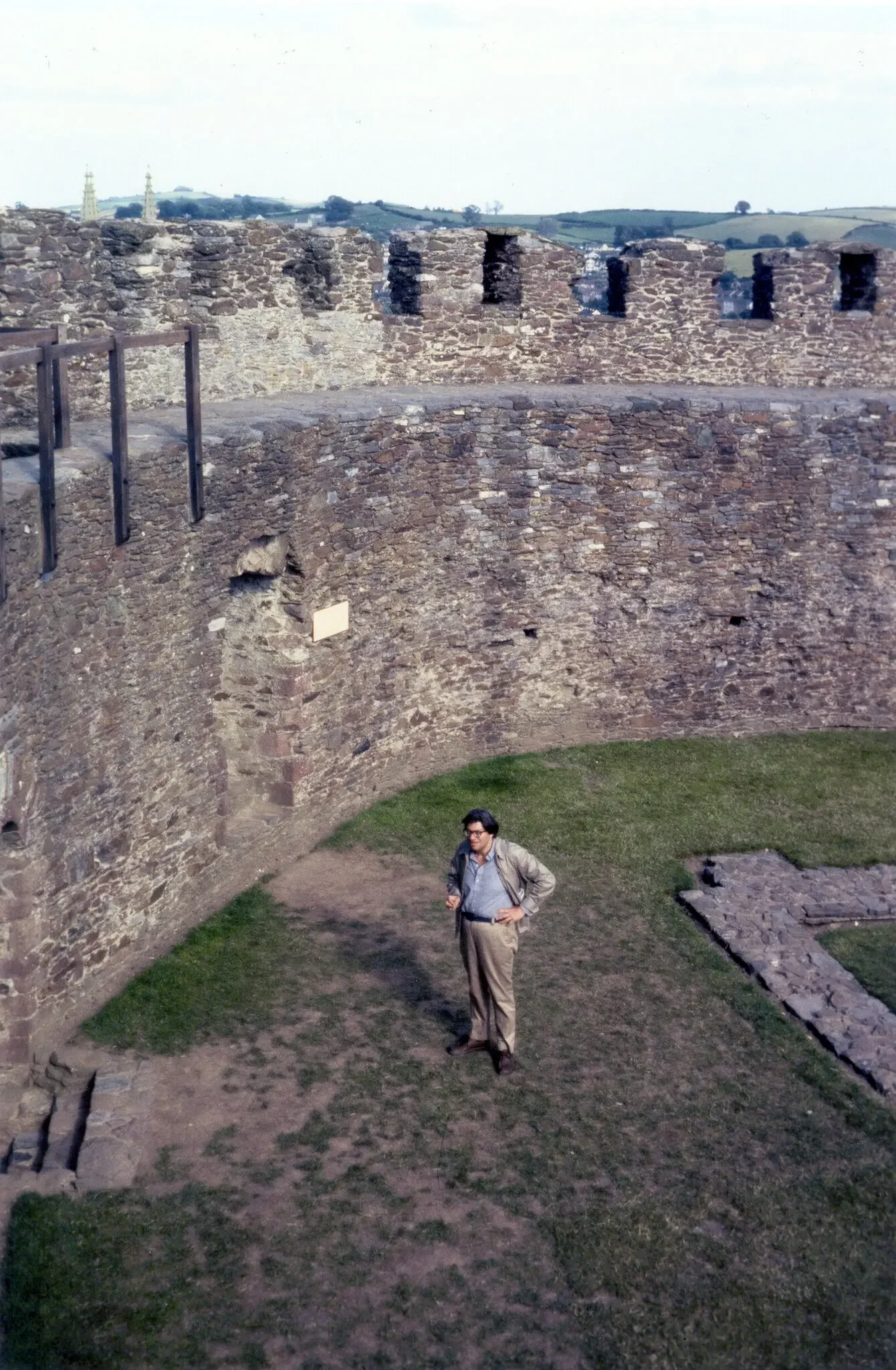
In 1972 Feldman joined the faculty at the State University of New York at Buffalo, where he helped build one of the most important centers for contemporary music in North America and formed a close friendship with the percussionist Jan Williams, who premiered many of his major works. As a teacher, lecturer, and mentor he shaped generations of composers while his own musical language grew more personal — and, strikingly, longer. His late works stretch to extraordinary lengths: the roughly two-hour piano work Triadic Memories (1981), built from single notes and repeated figures that recur six, eight, ten times before vanishing for good, so that a listener spends the rest of the piece trying to recall something the music has already stopped offering. Three Voices (1982), scored for a live singer against two pre-recorded tracks of her own voice, spends twenty minutes in wordless sound before suddenly setting a line from a poem by his friend Frank O'Hara, who died young in a car accident on Fire Island — a moment engineered to feel like the return of memory itself. And the String Quartet No. 2 (1983), which at roughly five hours may be the longest string quartet ever written, folds in a four-minute chorale early on that never returns except in what one scholar has called "ghostly" fragments, leaving listeners to miss something they can barely remember hearing.
By his final decade Feldman had essentially stopped writing music that could fit onto a conventional concert program. Several of his last scores run past an hour; two of them outlast Wagner's Tristan und Isolde. He liked to say he tailored his late works to specific performers, the way a tailor cuts a suit — writing with the touch of a favorite pianist or the sound of a particular quartet in mind. It's tempting, and not entirely wrong, to read the sheer scale of these pieces as a kind of quiet joke at the expense of Hitler's favorite composer. But the scale was really in service of something else: the enormous span of time Feldman needed for his spectral harmonies to do their slow work, the way a painter like Mark Rothko needed an entire room to make his canvases land. Feldman's 1971 orchestral work Rothko Chapel, written in response to Rothko's somber chapel of paintings in Houston, remains one of the clearest statements of that kinship between the two men's ambitions.
Feldman was reluctant, in interviews, to say much about where all this quiet, mournful intensity came from. Asked directly in 1972 whether his work carried the weight of Jewish mourning after the Holocaust, he deflected, gesturing instead toward a more abstract sense of loss — something closer to what he called the disappearance of art itself, or, in his own phrase, the sensation of "Schubert leaving me." He admitted later that he thought about the question privately. Whatever its source, the sense of loss in his music is unmistakable, and unresolved.
Feldman's influence has, by most accounts, come to outstrip that of his old mentor Cage. Cage's ideas remain more influential as ideas, but Feldman's music is what people actually want to sit with and perform, and in the decades since his death a whole shadow repertoire has grown up around him — by one count, some two hundred and fifty pieces written in his memory, from younger composers who have said that hearing Feldman was what first made writing music feel possible for them. Tyshawn Sorey's 2022 piece Monochromatic Light (Afterlife) directly answers Rothko Chapel. The homages keep arriving.
What makes Feldman's music feel so urgent in its centenary year is not merely historical significance, but the particular kind of attention it demands, and refuses to let you skip. We live in an age saturated with information, distraction, and algorithmic noise — notifications, headlines, an endless stream of content competing for the same sliver of attention. Feldman's music stands in deliberate opposition to that condition, though it would be a mistake to mistake it for simple calm. Beneath the surface stillness runs real unease, the same scarred, watchful quality found in his friend Samuel Beckett's writing (Beckett supplied the libretto for Feldman's only opera, Neither). This is not music to zone out to. It is music that keeps you anxiously present.
That unease was not an accident Feldman tolerated but an effect he pursued. Musicologist Ryan Dohoney's biography describes Feldman's musical thinking as, in essence, a pedagogical pursuit of anxiety — the composer believed that a controlled, sustained dose of uncertainty was instructive, even necessary, for a listener to actually pay attention. Comfort lets the mind wander; a mild, persistent unease keeps it tethered to the present sound. Seen this way, the long silences and the endlessly deferred repetitions in his late work are not simply meditative devices. They are deliberately unresolved, designed to keep the listener slightly off balance, alert to the possibility that something might — or might not — happen next.
He once suggested that music could transform a private experience into a public one. His compositions focus on the smallest details — a single timbre, a delicate shift in harmony, the resonance of a note disappearing into silence — and rather than overwhelming the listener, they invite us to slow down and encounter sound on its own terms. This is demanding, for performer and listener alike. It asks for patience, concentration, and openness. But it offers something increasingly rare in return: the chance to actually inhabit the present moment, on its own terms, unmediated. In a culture built to direct our attention elsewhere at every possible instant, Feldman's work — one hundred years after his birth, nearly forty since his death — remains a quiet, stubborn act of resistance. It asks us to listen more carefully, to notice more deeply, and to rediscover the extraordinary richness hidden inside a single sound.
For those interested in learning more about Feldman's life and artistic world, Ryan Dohoney's Morton Feldman, Friendship and Mourning in the New York Avant-Garde remains the most insightful exploration of the relationships and experiences that shaped one of the most original composers of the twentieth century.
This essay began as the program notes for the Border of Silence concert, given in Albuquerque, New Mexico, on June 20, 2026, and has been expanded here for Feldman's centenary year.